Author Archives: beatandtrack

Ad Gefrin and Brian Hope-Taylor

Thursday 16th April: Irish Centre, Newcastle

Post by Rannoch Daly

Archaeologist Roger Miket, who has long been intimately involved with research into the site of the Northumbrian royal township of Yeavering, in Glendale, Northumberland, spoke about his new book:

‘AD GEFRIN: Brian Hope-Taylor and his Quest for the Early Medieval Kingdom of Northumbria’.

Brian Hope-Taylor is best known for his excavations in the 1950s of the 6th or 7th century site at Yeavering, Known as Ad Gefrin (See his book ‘YEAVERING’ HMSO 1977). The site is celebrated in the Museum and Visitor Centre at the Ad Gefrin Distillery, Wooler, Northumberland.

During WWII Hope-Taylor was based at Medmenham, Bucks, the RAF centre for aerial photographic interpretation, assessing targets and bomb damage. One of the lessons learned from these experiences was that other things could also be spotted in aerial photographs, including markings in fields that looked like possible archaeological remains. At Medmenham he established productive working relationships with the future distinguished archaeologists Dorothy Garrod and Glyn Daniel, as well as the actor Dirk Bogarde. Incidentally, he also realised that mine detectors could be used to find ancient  metal artefacts, thereby pre-figuring the modern archaeological ‘detectorists’.

Whilst working on various excavations after the war Hope-Taylor gradually formed the view that markings in fields near Wooler evident in aerial photographs might be the site beside the River Glen where, according to Bede, Paulinus had baptised the subjects of King Edwin, who ruled Northumbria from 616 to 637 AD (BEDE Ecclesiastical History Book II.14; Penguin 1968).  After much lobbying and persuading of the academic and governmental authorities about funding, and some delicate discussions with the landowner, a local farmer, about access, Hope-Taylor’s excavations ran from 1953 to 1962. Most of his report was written up at the time but it was not published till 1977. It is now recognised as the pre-eminent work of post-war British archaeology.

The illustration below (B H-T’s Fig 63) shows the site of the Great Enclosure to the east, the main axis with the king’s hall (red) leading towards the rostrum and triangular tiered theatre in the centre and further buildings to the west. There are cemeteries in the east and west.

Miket and the Ad Gefrin Trust now have access to the site and have been excavating in the 2020s with modern techniques to elaborate on, and sometimes revise, the original findings. Miket has also had access to Hope-Taylor’s personal archive of photographs, documents and correspondence and the relevant files of the Ministry of Public Building and Works. In his book Miket uses these to tell the story of how this remarkable man made his remarkable discoveries about early Northumbria. Miket’s book is published by the Ad Gefrin Trust and can be purchased from the Ad Gefrin Centre, Wooler.

Next Meeting: 6.00pm 7 May 2026

Topic: Max Adams and others present ‘Boundaries, routes and sculptured stones in early medieval Scotland’.

Unquiet Women: from the Dusk of the Roman Empire to the Dawn of the Enlightenment

My new book is a bit of a special project.  For years I had wanted to redress the imbalance inherent in historical narratives – they are dominated by men and by men’s narratives.  My students are always asking me where the women are in history; and often I hear the view that women in history were either queens, nuns, or totally invisible.  I hope that Unquiet Women answers that.  Not many of the fifty odd stories in this book are about nuns or queens…

From the inside flap….

‘Wynflæd was an Anglo-Saxon noblewoman who owned male slaves and badger-skin gowns; Egeria a Gaulish nun who toured the Holy Land as the Roman Empire was collapsing; Gudfrid an Icelandic explorer and the first woman to give birth to a European child on American soil; Mary Astell a philosopher who out-thought John Locke. In this exploration of some of remarkable – but little-known – women living between between the last days of Rome and the Enlightenment, Max Adams overturns the idea that women of this period were either queens, nuns or invisible. In a sequence of chronological chapters, a centrepiece biographical sketch is complemented by thematically linked stories of other women of the time. A multi-faceted and beautifully illustrated study of women’s intellect, influence and creativity, Unquiet Women brings to life the experiences of women whose voices are barely heard and whose stories are rarely told.’

There is a strong personal element underlying the book: my mother was one of fourteen, and as I was growing up in a family without a father around I was heavily influenced by my extraordinary aunts and Grandmother – not to mention my heroic mother.  So the book is both inspired by them and a tribute to a remarkable family of positively unquiet women.

Unquiet Women will be published by Head of Zeus in hardback on November 1st 2018.

In the Land of Giants autumn talks, signings and appearances

Official book launch courtesy of Explore programme and Ampersand inventions

Commercial Union Building 4th Floor, Pilgrim St Newcastle on Thursday Dec 8th 2015 7pm free entry

Talks/signings

The Voyage of Eda Frandsen

Hexham History Society, Tuesday 10th November 6.30pm Queen’s hall

Maryport Litfest, Senhouse Roman Museum

Saturday 14th November, 11 am 

Books on Tyne, Newcastle upon Tyne

Thursday 26th November, time TBC

Signings

Forum Books, Corbridge 11am Saturday October 10th

Cogito Books, Hexham 11am Saturday December 5th

Darkness and light

Je suis ecrivan.  Je suis Charlie.  One writer under attack means all writers are under attack.

On a lighter note. I will be appearing at the Words on the Water festival in Keswick on 12th March – just before Helen Macdonald whose brilliant book Hawk has won lots of prizes. I’ll be talking about The Wisdom of Trees, and in a rather lovely setting on the shores of Derwentwater.  Looking forward to meeting her… and Melvyn… and Shirley Williams. For details check out the website www.wordsbythewater.org.uk

Wisdom of Trees launch

The official launch of The Wisdom of Trees will be held courtesy of the Explore programme at the Joseph Cowen Centre, Commercial Union House on Pilgrim Street Newcastle: Wednesday 29th October 2014.  Signed copies for Explore members at £10 each; £15 to non-members or join on the night.

For details contact EXPLORE

Torch relay… really?


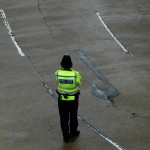
The blessed torch passes along the street and for two hours it’s possible to sit in an upper storey window watching the scene unfold: crowds and clouds gather in unison; a lone copper watches.  In parochial Northern England it is easy to dissociate this odd ritual from Hitler, who introduced the relay in 1936 to show off his Aryan countrymen’s physiques; and to forget Prometheus, whose daring act of self-liberation in stealing the secret of fire from Zeus is re-enacted by hundreds of small-scale worthies oblivious to the connotations.  In celebrating human endeavour, the crowd simultaneously evidences its own willingness to be manipulated by the corporate Gods of the new Olympus: Coca-cola, Lloyd’s Bank, Samsung and any number of other monopolistic sponsors.  Couldn’t actually see the torch in all this; but later, a chap in a white suit brought his into the pub and was much in demand for photo-opportunities.

Prometheus, whose punishment was to be chained to a rock for ever and to have his liver torn out every day by an eagle, would have struggled with the ironies.  Humans’ self-enslavement to Capital is an everlasting open wound, to be sure.  On the other hand, there is something earthily touching about the English: their sluggish stoicism and clubbable good humour in the rain.  They may not be liberated, but who else would smile in the face such conditions of imprisonment?

2012: what’s changed?

Two hundred years on… 1812-2012

It’s hard to escape the fact that this is Charles Dickens’s bicentenary.  And any music lover knows that Tchaikovsky wrote an overture about Napoleon’s disastrous advance on Moscow in 1812.  Anniversaries are fascinating: they make us look back and see ourselves in perspective.  But it’s even more interesting to ask the question, what else was going on in the year that Dickens was born – unremarked at the time by any except the Dickens family – and in which Jane Austen was dotting the last i’s in Pride and Prejudice, sensationally published the following year. 

As it happens, 1812 was one of those years.  Britain was lurching towards final victory in the wars against France which had already lasted nearly twenty years.  The Duke of Wellington, taking advantage of Napoleon’s distractions in Russia, beat a French army at Salamanca and entered Madrid.  Concerned that the soldiers’ feet were suffering from all that marching, Marc Brunel, the French émigré engineer and father of Isambard, was given an order to manufacture boots for the army in a factory which was a marvel of the age (he went bust after Waterloo three years later). 

Across London plain Mr Humphry Davy, third son of a Cornish cobbler, became Sir Humphry for his services to science, having discovered half a dozen new elements in a dazzling decade of experimentation (and injury).  He celebrated by marrying a wealthy Edinburgh bluestocking, retiring from the Royal Institution and going on honeymoon – to France, where he was given the Napoleonic Gold medal.  In doing so he missed a rather important letter which arrived too late on his doorstep.  The letter reported a terrible disaster which had occurred in May in the Northern coalfields.  Ninety-two men and boys perished in an explosion at Felling Colliery on Tyneside and a group of concerned gentlemen formed the Society for the Prevention of Accidents in Mines as a result.  Would Sir Humphry come to the aid of the miners and invent a lamp that would help them to see underground without the risk of exploding methane?  The famous safety lamp had to wait till his return two years later; and that’s another story entirely.

If you think all that’s pretty momentous, enough to fill a year, think again.  For 1812 also saw the only assassination of  a British Prime Minister: Spencer Perceval, killed by a disgruntled banker.  In other faint echoes of our own times, radical journalists Leigh and John Hunt were imprisoned for some very rich remarks about George, the unlovely Prince Regent, made in their paper, the Examiner.  And then there is the small matter of the United States of America declaring war on Britain.  It was a small war, as these things go; but still. 

Looking back two centuries it feels sometimes as if the world has changed irrevocably.  Then again, one is inclined to think that Britain’s ancient antagonists the French have it right when they say, plus ça change, plus c’est la même chose.